Why Believing You’re Special Can Rot You from Within
Published on
Reading Time
20 mins

Introduction
“You are fucking nobody!” — my mother, Sabagul, said to me when I was 13 years old. I’ll explain the background later so you can understand why. For now, let’s focus on the general meaning of my next post. And by the way, thank you for reading.
Sometimes, your ego can go too far. It has its peaks and its downfalls. For me, the peak spanned from around 13–14 years old until about 20–21. These were the phases I went through during those years. But how can you tell if your ego has become toxic?
I believe it starts when you create false scenarios in your mind — imagined outcomes that benefit only you and your self-made sense of fame, all without ever stepping outside your own thoughts. This gives you a sense of entitlement, as if luck owes you something.
The brain has two key tendencies that make this possible:
It often cannot distinguish reality from thoughts — especially imagined, self-serving ones.
It tends to be lazy.
These imagined scenarios often include an element of “luck.” This is not real luck but a shortcut your brain invents because it’s too lazy to trace the actual chain of actions that lead to achievement. In other words, when a fake thought inflates your sense of being special, it almost always invents a fake luck factor as well.
And here’s the danger: once you step out of your imagination, these false beliefs start influencing your behavior, shaping your decisions, actions, and how you see the world.
Backstory
When I was 13 years old, we had a local Nowruz feast. In my small town, Dangara City, there’s the #1 and most famous street of the local rich people — we call it East Street. Yeah, that’s right. They often organized such events where we could come and eat plenty of pilaf. That’s exactly where it all started.
My mother called me and said she was there with my sister at the local event. She told me it would be great if I came and had some pilaf. I said, “Okay, no problem, mother,” and started getting ready. I wore a pair of blue jeans for teens, a nice T-shirt, and a black cap.
Here’s the important thing: it wasn’t a gala event — just a casual gathering where people ate while the chefs served pilaf to everyone. When I arrived, I saw what I would call a small “disorganization of things,” at least according to my 13-year-old perception. Everything seemed unaesthetic to me — no proper chairs, no good tables, too many people moving around in random directions, and nobody serving food. It was all self-service. That really pissed me off.
But the worst part was something else — I had this feeling that I wasn’t the central figure in that little feast, and I hated that feeling at the time. That’s the worst thing about ego: you want everything to revolve around you. But out there, nobody cared about me — not more, not less.
So, I just found a corner and sat down. I didn’t go out to get my plate of pilaf. My mother noticed and came over. She asked, “Why didn’t you get anything? Go, they’ll serve pilaf if you just ask.”
I said I wouldn’t go — like a small child full of silent complaints. She asked me for a reason.
Do you know what I said?
I quoted Hafez — Khwāja Shams-ud-Dīn Muḥammad Hāfez-e Shīrāzī. Hafez was known for his witty and often audacious remarks about social gatherings, love, and human behavior. In his ghazals, he often expressed disdain for events where he wasn’t the center of attention or favorite guest, reflecting his sharp wit and deep sense of personal dignity.
So I said, “I will not attend this event since I am not the favorite one.”
The Debate
“You are fucking nobody!” — my mother, Sabagul, said to me.
“What was your goal in coming here and saying such things? People came just to eat, that’s all — nobody cares who you are!” she added.
In the end, I just listened to her and ate my dish as quickly as possible.
I think if Hafez were alive, he would slap me so hard I’d lose control, fall unconscious, and probably slip into a coma. He would definitely do that, because I used his words in a completely wrong way.
You know, inside each of us, there’s a person who thinks rationally — a voice that wakes up after moments like this. That’s exactly what happened to me. Something inside me said: You didn’t even organize this event. You didn’t spend a single penny on it. So why are you so pissed off?
The Year 2025
I think that during those years of my childhood, I wasn’t the only one with that kind of contagious behavior. After that event, and throughout my teenage years until now, life has taught me to keep my head down.
When I had both parents, I couldn’t care less about what was happening around me. The truth is, I maintained that behavior because I was still a parasite of my family — my parents provided everything, and I simply consumed it all. On top of that, I developed a toxic attitude. In short, I was a toxic parasite.
But when life hit hard, I began to see reality. I discovered the real people behind the scenes — those who live simple lives but quietly influence the financial world. I learned about people who truly shape economies, yet never show off or act as if they’re special. That’s when I realized: I am not special, and I am not the center of the universe.
I started working at the local bazaar, collecting and selling scrap metal just to earn enough money. Then life delivered its first real punch — my father left us to start a new life. I looked for many jobs I couldn’t get. And through all of that, I realized something: that toxic feeling inside me was finally gone.
But how can you redefine yourself — how can you convince yourself that you are not the solar system around which everything revolves?
It’s actually quite simple: ask yourself how the people around you have benefited from your actions or creations. There are two sides to this — material and spiritual.
Did you invest in society in a way that truly benefits others? What did you invest? How did you invest? Does that investment make the lives of the people around you easier? Do people remember you as someone who made a difference — someone who redefined even a small part of their world?
What would you leave behind for others if you knew you wouldn’t see them tomorrow?
In short, you must give something to humankind — something that, even slightly, makes life easier or better for others.
When I asked myself these questions, I didn’t have clear answers at the time. That’s when I realized that the sense of dignity I carried had no solid foundation. To build that foundation, I put my head down, became grounded, and started working — for my future and for the future of the people around me.
Conclusion
This post is a self-reflective one — a kind of self-judgment — written with the intention of sharing my own experience so that others can understand what to do and what not to do.
I believe the 21st century can be defined as the century of millions upon millions of people who think they are special — without any solid ground for that belief. We now have countless individuals who feel entitled to things they haven’t earned. I don’t think we’ve ever had as many people like this in any previous century, in the ancient world, or at any other time before the 21st.
The typical behavior of such people today can be broken down into three main parts:
A false sense of being special;
A false sense of entitlement;
A false sense of mysticism — believing there’s something extraordinary within themselves that others don’t have.
But please, calm down. The world is far too big for you to think you’re the center of it. You can be unique as a human being — because there’s no exact copy of you — but that doesn’t make you special, entitled, or mystical.
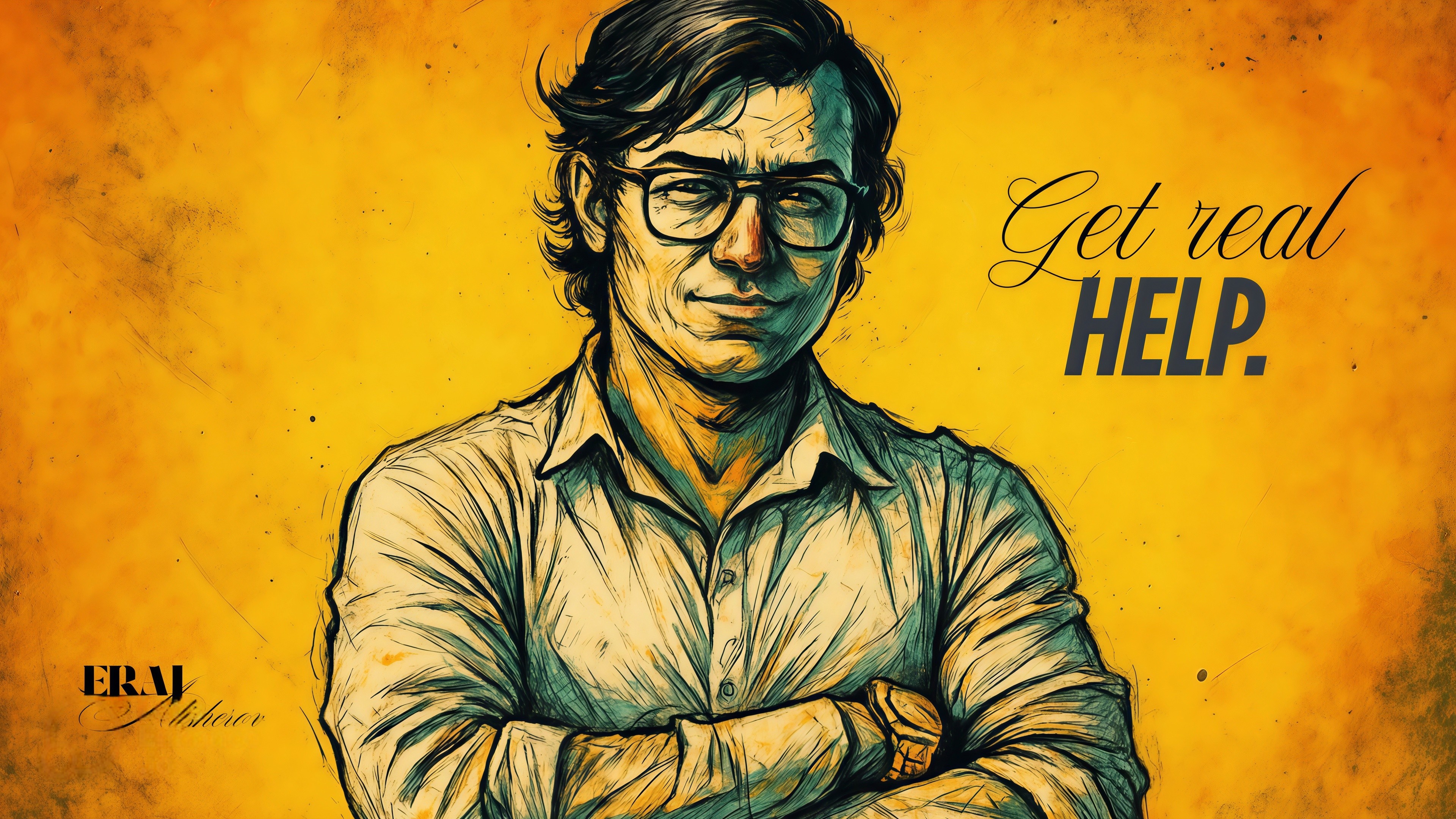
Leave those illusions aside. Get real help. Work hard. Invest in yourself and in others. Make life easier — for yourself and for those around you.
See you at work.
Thanks for reading my thoughts on this.